

The African college of excellence in the social and human sciences
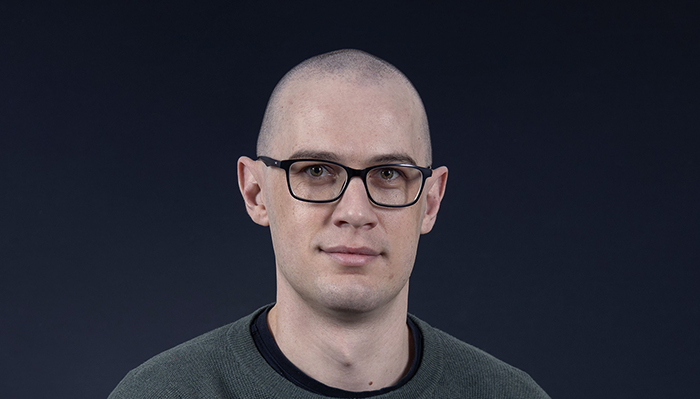
Prof Reinhardt Fourie
"Literature is an important cultural expression that is almost as old as humanity itself. It explores the human condition and the world through different eras. This makes literature a valuable source of analysis if we wish to expand our understanding of ourselves, each other and the world we inhabit."
These are the views of Prof Reinhardt Fourie, Associate Professor in the Department of Afrikaans and Theory of Literature, College of Human Sciences.
As a literary figure, he specialises in comparative literature, moving between Afrikaans and (South African) English literature. He has published several articles on publishing studies, poetry, prose, literary systems, world literature, and the work of Marlene van Niekerk and Joan Hambidge. In addition, he has published on film/television studies and game studies.
Fourie is an active literary critic and has published countless book reviews over the last 15 years, mainly on South African literature.
“My interest in literary studies started in childhood,” he says. “I have always been interested in books and reading. My parents and grandparents were avid readers and instilled this interest in me. Studying literature and becoming a literary scholar was a logical career path.”
Fourie’s scholarly journey began with studying languages, comparative literature, and literary theory at the University of Pretoria, Ghent University (Belgium), the University of Leuven (Belgium), and Stellenbosch University.
He lectured at the University of Pretoria before joining Unisa in 2014, first as a lecturer in the Department of English Studies, and later, in 2022, in his current department, Afrikaans and Theory of Literature.
This emerging scholar believes he must achieve more than he has so far. He says receiving his PhD in 2020 and becoming an associate professor in 2026 were significant moments in his career.
From 2019 to 2025, Fourie served as the chairperson of the Literature Association of South Africa (LASA; formerly the South African Society for General Literary Studies).
The Literature Association of South Africa (LASA) aims to promote the study of literary theory and comparative literature. “Since I studied both literary theory and comparative literature, this aim is important to me,” he reflects.
During his tenure as chair, LASA was reimagined for a new era. Its highly regarded publication, the Journal of Literary Studies / Tydskrif vir Literatuurwetenskap (JLS/TLW), changed its publishing model and became open access.
Furthermore, he was involved in organising numerous conferences and colloquia under the banner of LASA and co-edited several special issues of JLS/TLW on the themes of these events with Unisa colleagues Prof Alan Northover and Dr Neil van Heerden.
His relationship with LASA continues. “As editor of JLS/TLW since the beginning of 2026, I am following in the footsteps of several highly regarded predecessors, such as Prof Ina Wolfaardt-Gräbe, Prof Andries Oliphant, and Prof Alan Northover,” Fourie comments.
He hopes to see the journal thrive and expand its contributions to research in literary studies, literary theory and comparative literature.
In South Africa, a National Research Foundation (NRF) rating is an important form of recognition from one’s peers. As a young scholar with 16 years of research experience, Fourie applied for this sought-after recognition, and it is no surprise that today he is a Y2 NRF-rated researcher.
“Receiving an NRF rating is a good moment for any young scholar. It is a milestone indicating how your fellow researchers view your work,” he observes.
When asked about his experience in applying for the rating, Fourie says the following:
“Applying for an NRF rating can be daunting. But if one takes the time to plan for the application process and notes the key dates and institutional requirements, the application can run smoothly, even though it can take quite a long time from preparing the application to finally hearing the outcome. My advice to emerging scholars is to know the application requirements and plan accordingly. This could involve simply completing the application (if you are already in a position to do so). But in most cases, a few years of research and publication are needed before you are ready to apply. Keep your focus and do not let anyone rush you into applying before you have a strong application. In your research, explore what interests you. Do not derail that for the sake of short-term adherence to broad focus areas at your institution or some research fad that might not enhance your research or benefit you as a developing scholar. A consistent body of work is what the NRF values most. Sticking to your research topics will better serve the broader academic project, which is much larger and more important than any individual researcher’s ambitions or the short-termism that currently governs academic institutions.”
* By Mpho Moloele, PR and Communications, Department of Research, Innovation and Commercialisation
Publish date: 2026-07-28 00:00:00.0
 From Unisa graduate to global fraud intelligence investigator
 Studying at Unisa was the right decision
 More than a game: Unisa is building health, teamwork and lasting connections through sport
 How prominent researcher is changing lives and raising Unisa's global profile
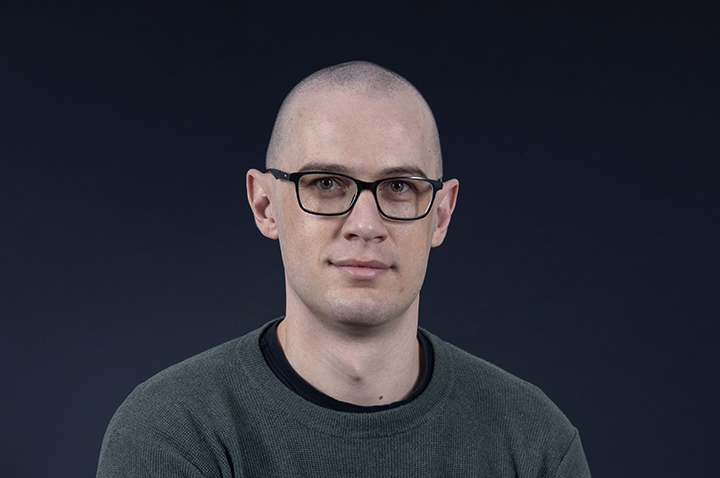 Literary scholar earns an NRF Y2 rating