
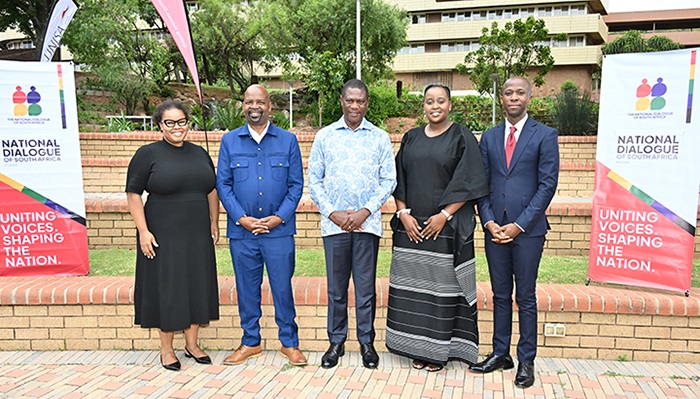
Deputy President His Excellency Paul Mashatile (centre) with Eminent Persons Group's representatives (from left): Lindiwe Mazibuko, Prof Tinyiko Maluleke, Nompendulo Mkhatshwa and Siyabulela Xuza
On 17 and 18 January 2026, Unisa held the induction of the National Dialogue Steering Committee, which is entrusted with helping to reimagine South Africa’s future. The committee was formed following the National Convention that was held in August 2025, which marked the beginning of a profound, citizen-led journey towards national renewal.
The National Dialogue is recognised as one of the most defining and courageous undertaking in democratic South Africa. The dialogue is grounded on core principles of, among others, inclusivity, ensuring that no sector and community is left behind, and on transparency and accountability, which entail building trust through openness in how decisions are made, how resources are managed and how outcomes are reported. Further, the dialogue aims to be action-oriented by moving beyond talk to translating into compacts, reforms and tangible change at every level of society.

Prof Mpho Ngoepe
In his welcome address, Prof Mpho Ngoepe, Unisa’s acting Vice-Principal of Research, Postgraduate Studies, Innovation and Commercialisation, remarked that Unisa’s selection as the venue for this induction affirms the trust in its capability to convene complex engagements of national and global consequence, and as a university deeply rooted in the ideals of access, inclusivity, diversity and transformation. He added: "The establishment of the National Dialogue Steering Committee signals a collective resolve to listen deeply, engage honestly, and collaborate meaningfully across the breadth of South African society."
According to Ngoepe, the National Dialogue process presents an excellent opportunity for South Africans across all spheres of society to give counsel to the state on the ideal solutions to the challenges that the country faces. He said: "May this induction be embedded on reaffirming our common commitment to a South Africa that is just, inclusive and anchored in democratic values."
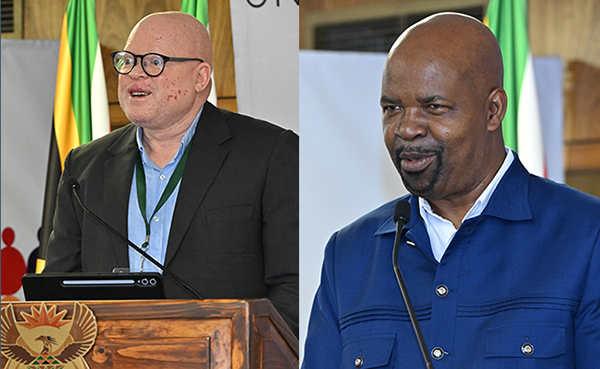
From left: Makhukhu Mampuru and Prof Tinyiko Maluleke
Delivering the opening address, Makhukhu Mampuru, National Economic Development and Labour Council’s (Nedlac’s) Executive Director, highlighted his organisation as one of the first institutions that was established after South Africa's 1994 democratic elections. He also noted that Nedlac is a pre-eminent institution for fostering social dialogue, therefore highlighting its relevance in facilitating the National Dialogue. Noting the support from all spheres of government, he maintained that the work of the dialogue would succeed if it found resonance, application and implementation in the work of government.
Prof Tinyiko Maluleke, Chairperson of the Eminent Persons Group (EPG) and Principal and Vice-Chancellor of Tshwane University of Technology, delivered a message of support, recognising structures and institutions that ensure the promotion and execution of the dialogue. Among other roles, EPG acts as the voice and public image of the National Dialogue. "The National Dialogue Steering Committee is the most representative grouping of citizens from various sectors of our society; therefore, this body has the moral authority, sectoral breadth, and societal embeddedness necessary for it to administer and coordinate the dialogue’s processes," he asserted. For Maluleke, the committee has the strategic national responsibility of fostering and nurturing a cross-cutting and inclusive approach to dialogue.
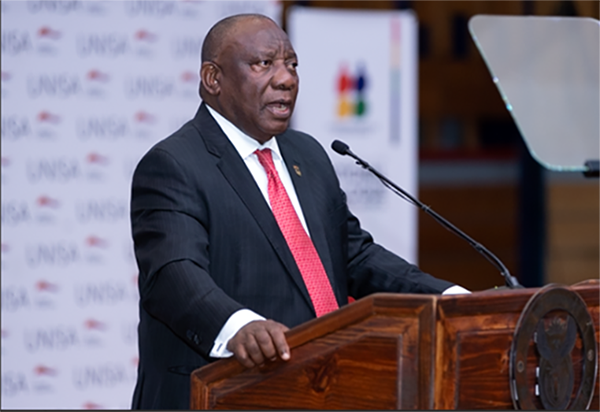
His Excellency President Cyril Ramaphosa (Sourced from the 2025 National Convention)
In his keynote address, South African President, His Excellency Cyril Ramaphosa, acknowledged the Steering Committee for accepting the call to serve the country at a critical moment. "While we have made important progress since democracy in forging a united, democratic nation, the vestiges of our apartheid past remain," he stated. Ramaphosa added: "Poverty, unemployment and inequality are deep wounds that prevent our country from reaching its full potential, with crime, gender-based violence and corruption haunting our communities. Many people have become disengaged from the democratic process." Therefore, the president mentioned that the gathering is aimed at confronting the country’s challenges and forging a path forward.
Ramaphosa stated that from the Freedom Charter to the Constitution, and from the National Peace Accord to the country’s response to the Covid-19 pandemic, South Africans have pursued dialogue, cooperation and partnership to give expression to diverse voices. He also asserted that the Steering Committee’s responsibilities include forging a new social compact for South Africa’s development, and for diverse voices to determine solutions to the country’s challenges to build a country we endeavour for future generations.
Ramaphosa urged the Steering Committee, working with EPG, the Inter-Ministerial Committee and the Secretariat, to ensure that the coordination and governance of the dialogue is well-organised, transparent and credible. Additionally, he encouraged the committees to ensure that the process promotes understanding and healing.
"As we confront uncomfortable truths and ask difficult questions, we must create spaces where discussions encourage healing. We must speak with courage and listen with humility," reiterated Ramaphosa. He concluded: "Through your work, the views and proposals from thousands of conversations across the country will be synthesised into a clear vision and an agreed programme of action for adoption by the second National Convention."
Among other dignitaries, the event was also graced by Deputy President His Excellency Paul Mashatile, who appreciated Ramaphosa’s decisive leadership and the determination of the dialogue’s committees and participants to ensure its success.
* By Nancy Legodi, acting Senior Journalist, Department of Institutional Advancement
** Photography by Shooheima Champion, Unisa Multimedia Centre
Publish date: 2026-01-19 00:00:00.0
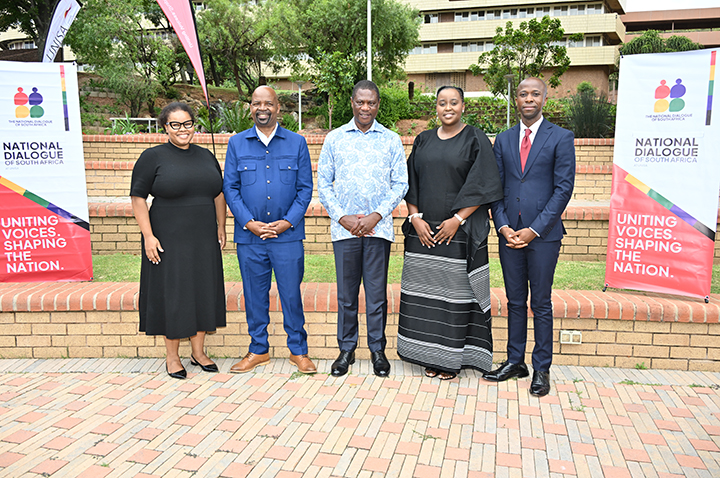 The National Dialogue Steering Committee entrusted with helping to reimagine South Africa's future
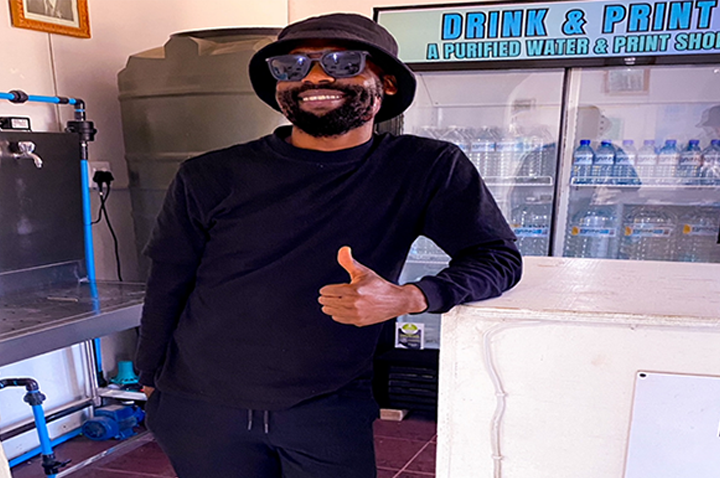 Unisa studentpreneur triumphs at the 2025 EDHE Intervarsity Competition
 Distinguished scholar awarded prestigious Royal Society Wolfson Visiting Fellowship
 The 2026 Decoloniality Summer School opens a new chapter in transforming the classroom
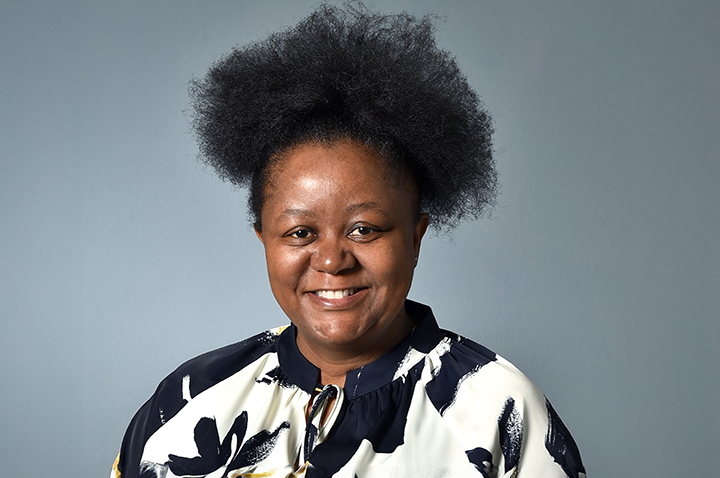 Renowned Unisa Professor Mazibuko to serve on the National Dialogue Steering Committee