
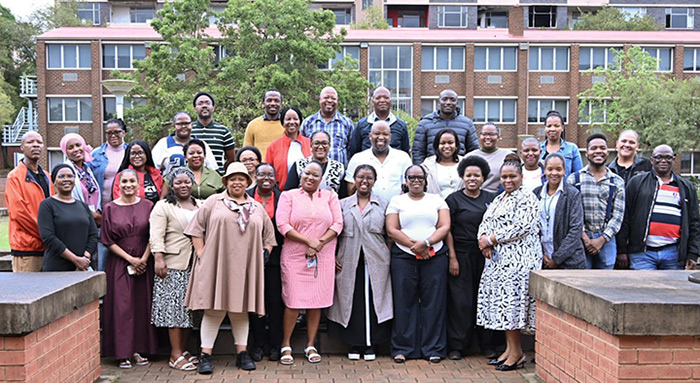
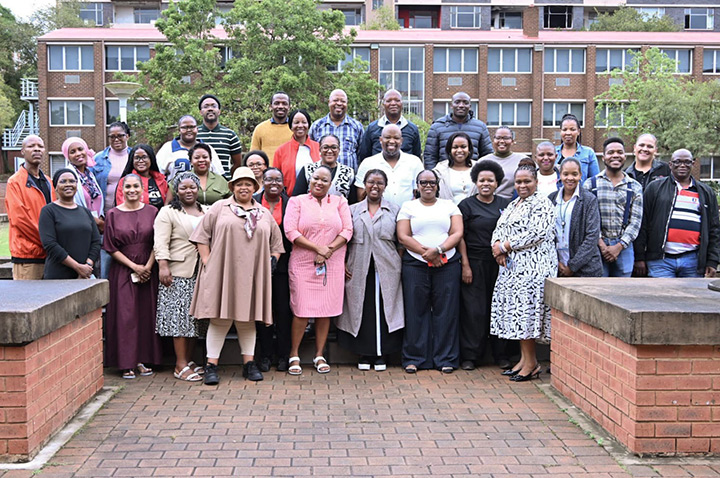
Facilitators with Unisa staff members
The recognition of Sign Language goes beyond linguistic justice. It also demonstrates the effort to create an inclusive society and contribute to cultural diversity by incorporating communication preferences.
Following the SASL Charter launched in 2020, Unisa has been actively involved in initiatives that empower staff and enhance communication for the deaf community. This community often faces communication barriers, considering the inadequate effort by society to learn Sign Language.
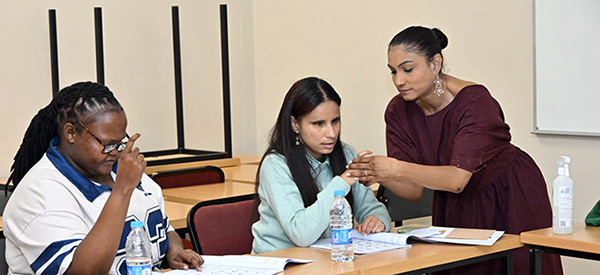
Facilitator Candice Govender-Morgan with attendees
Unisa has taken a step towards incorporating Sign Language training for its staff. This initiative, in collaboration with the Education, Training and Development Practices Sector Education and Training Authority, aims to enable staff to engage in basic, meaningful conversations about themselves, their surroundings and lived experiences.
Underscoring the value of equipping staff with Sign Language skills, Dr Gwendoline van der Berg, acting Director of Human Resource Development, remarked that the programme will help ensure that Unisa campuses and service points promote inclusivity and diversity. "Our vision is to cultivate a Unisa community where communication is not a barrier, but a bridge where every individual, regardless of their circumstances, feels seen, heard and valued," she said.
Relatedly, Deaf culture is a distinct social and cultural identity that values Sign Language and promotes a sense of pride and belonging for the deaf community. While there are regional variations in Sign Languages, they are distinct from spoken languages. Sign Languages play a crucial role in education, accessibility and advocacy for deaf rights. There are continued efforts to expand the use of Sign Languages in schools, government services and in the media to promote inclusivity and equal communication opportunities.
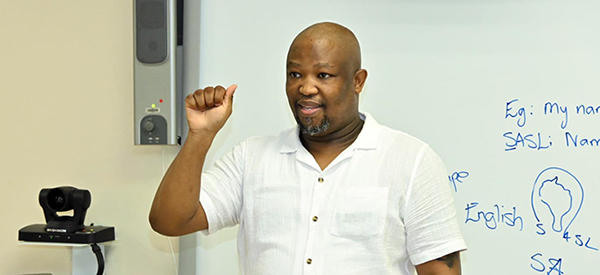
Facilitator Isaac Monchwe
The week-long SASL Foundations Course deepens understanding and cultural importance of Sign Language, contributing to greater social cohesion between the deaf community and South African society at large.
The course will progress from foundational knowledge to practical fluency, incorporating both midcourse and final summative examinations. It empowers participants to demonstrate fluency in Sign Language and its parameters, and on the basic principles of deaf culture etiquette upon completion.
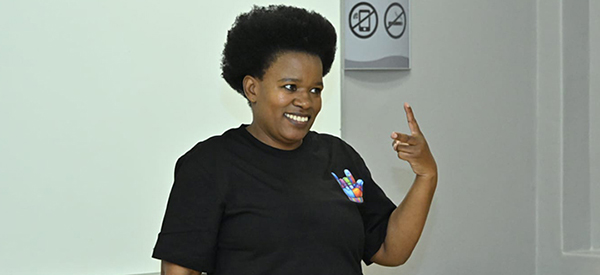
Facilitator Ntombi Sukuza
By highlighting the significance of Sign Language, the university advances national transformation priorities and upholds international best practices for inclusive education and workplace accessibility.
The integration of SASL into employees’ training programmes further demonstrates Unisa’s commitment to serving the broader global community while transcending language and cultural barriers.
* By Moleboheng Mpafa, Communications Intern, Department of Institutional Advancement
** Photography by Shooheima Champion, Unisa Multimedia Centre
Publish date: 2026-04-17 00:00:00.0
 Bridging the communication gap through Sign Language inclusivity
 Unisa hosts City of Tshwane's 2026 SoCA
 Unisa Mining Engineering team earns prestigious industry recognition
 Unisa Gauteng Region drives a digital future with robotics workshops
 Unisa explores strategic collaboration to intensify its music education