

The African college of excellence in the social and human sciences
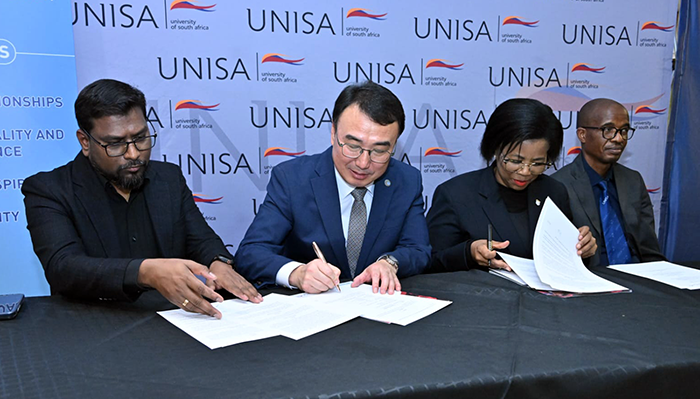
Signing the MoU on behalf of their respective institutions were Prof Jooseop Keum, General Secretary of the Council for World Mission (second from left), and Prof Puleng LenkaBula, Unisa Principal and Vice-Chancellor (to his right)
Prof Puleng LenkaBula, Unisa Principal and Vice-Chancellor (VC), and the Department of Christian Spirituality, Church History and Missiology in the College of Human Sciences, recently hosted a public lecture titled "Eudaimopolitics vs Necropolitics: Witnessing to Radical Hope in Catastrophic Times".
The comparison between eudaimopolitics and necropolitics represents a fundamental conflict between a politics focused on fostering human flourishing (eudaimonia) and a politics centred on the management, production and exploitation of death (Necropolitics).
Held on 9 April 2026, at Unisa’s Muckleneuk Campus, the lecture was followed by the signing of a memorandum of understanding (MoU) between Unisa and the Council for World Mission (CWM).
Delivering the opening and welcome address on behalf of the VC, Prof Solomon Magano, Vice-Principal of Institutional Development, acknowledged the presence of members of Unisa’s executive and extended management, representatives from CWM’s international and continental offices, leaders of churches and faith-based organisations, experts from the business sector, members of non-governmental and non-profit organisations, and students from Unisa’s national and regional student representative council.
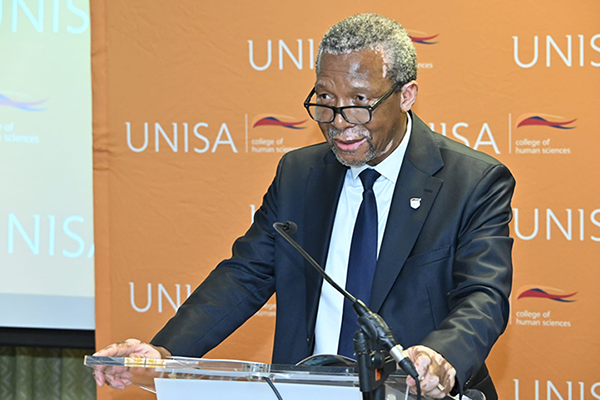
Prof Solomon Magano delivering the welcome address
Stressing the nature of the lecture, Magano stated: "We gather today at a moment that demands honesty, courage and ethical clarity. It is a moment of public moral reflection, one that invites us to interrogate who we are as institutions, what visions of life we serve and how we respond responsibly to the world as it is and not as we might wish it to be."
Referring to the theme, Magano maintained that it names the ethical terrain upon which universities, churches and societies are now compelled to stand. He further explained that what we confront today is not merely a technical or administrative failure, but a crisis in how we value life, order our economies and imagine our collective future.
He continued: "We inhabit a world in which crisis has become normalised, economic inequalities deepen even as wealth accumulates at staggering levels, ecological devastation accelerates despite unprecedented scientific knowledge, and repeated moral warnings, violent displacement and disposability increasingly define the daily lives of the poor, the racialised, women and children," he said.
Delivering the lecture, Prof Jooseop Keum, General Secretary of CWM and Professor Extraordinarius at Unisa, emphasised that the theme calls for deep reflection on the nature of knowledge, power and the forces shaping our world. He reiterated the mission to witness to faith, hope and love.
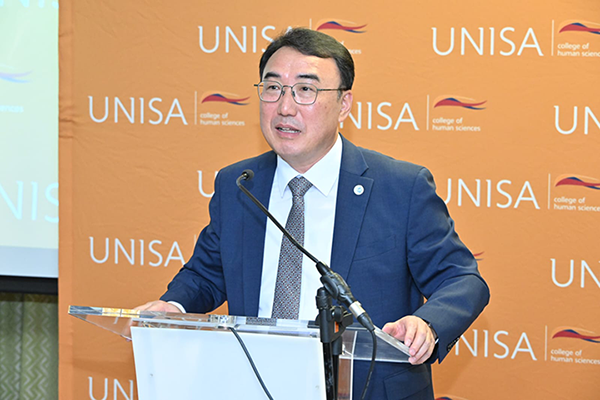
Prof Jooseop Keum delivering the lecture
Keum drew from Achille Mbembe’s 2019 work on necropolitics to address the alarming resurgence of racist, fascist and nationalist movements that seek to exclude and harm others. "Democracy has begun to reveal its darker aspect, which is rooted in desires, fears, emotions, relationships and violence stewarded colonially," he said.
Continuing, Keum explored how Mbembe’s new understanding of humanity could enable us to view others not as people to exclude, but as people with whom we can collaborate to create a more just world.
He suggested the practice of eudaimopolitics as radical hope in response to the challenges posed by necropolitics in our societies.
Keum explained that CWM and Unisa must deal with forces of necropolitics, which prevail in the current world order and inflict untold suffering on the defenceless. He implored the institutions to engage in a more meaningful way, saying: "We are gathered at a time where the world crisis compounds challenges that demand theological and prophetic responses."
Keum provided key insights into the important aspects of the practice, such as cultivating collective flourishing governance through virtue, reason and self-actualisation. In addition, he reiterated the relevance of stable, long-term flourishing through active excellence and shared purpose, shifting from death to life.
Keum argued that eschatology is a means of finding hope in the coming reign of God, highlighting that the purpose of the apocalyptic Book of Revelation was to reflect on second chances. "The true message is not the final judgement or destruction, but the radical hope in catastrophic times, outlining God’s intervention in human affairs."
The MoU was signed by the VC and Keum, facilitated by Prof Boitumelo Senokoane, Executive Director of the Department of Institutional Advancement, and Dr Angeline Magabane, Director of Unisa’s Internationalisation and Partnerships Directorate
Magabane asserted that the MoU reaffirms Unisa’s commitment to internationalisation and partnerships, and that the collaboration is expected to produce 50 doctoral graduates over the next 10 years.
* By Victor Malatji, Journalist Intern, Department of Institutional Advancement
** Photography by Shooheima Champion, Multimedia Centre
Publish date: 2026-04-13 00:00:00.0
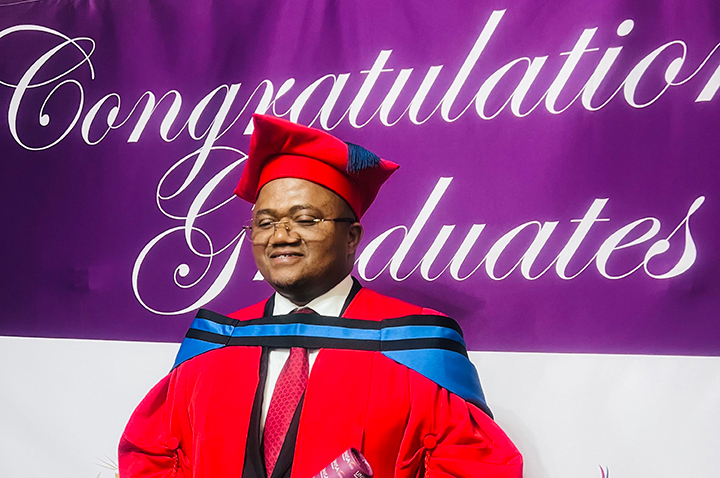 CRDB Bank CEO earns PhD from Unisa
 In a world of misconceptions, clarity is power
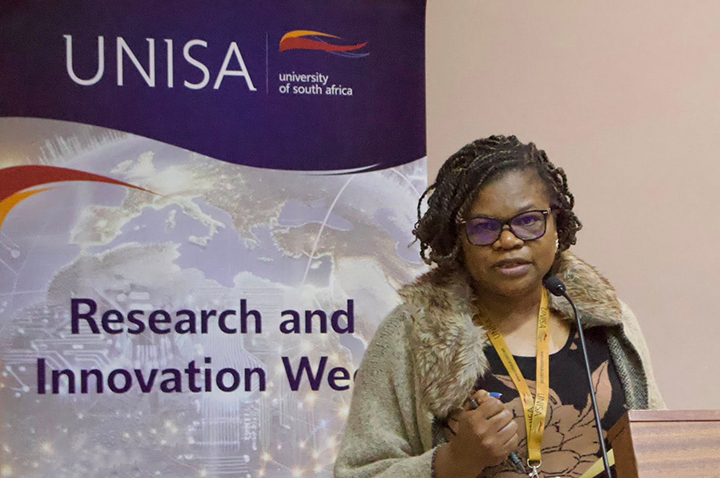 CSET showcases research excellence at Unisa Research and Innovation Week 2026
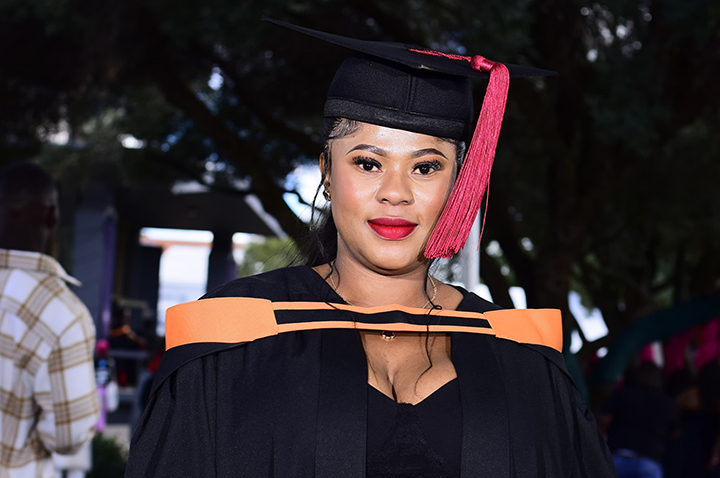 Celebrating a linguist in pursuit of greatness
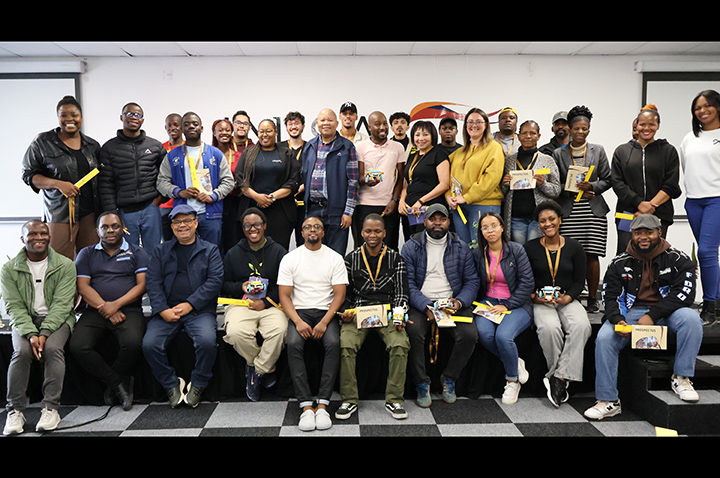 Unisa advances digital skills through robotics and coding initiative