

The African college of excellence in the social and human sciences
Prof Annalie Botha delivered her inaugural lecture this year entitled The Critical Care Environment: Should it be Africanised? “When one reaches a milestone in one’s life, as is the case for me tonight, it is appropriate to look back and reflect on what one has learned, to consider the present to determine what one could have done differently, and to look forward to ensure that one changes what can be changed to warrant a better future.”
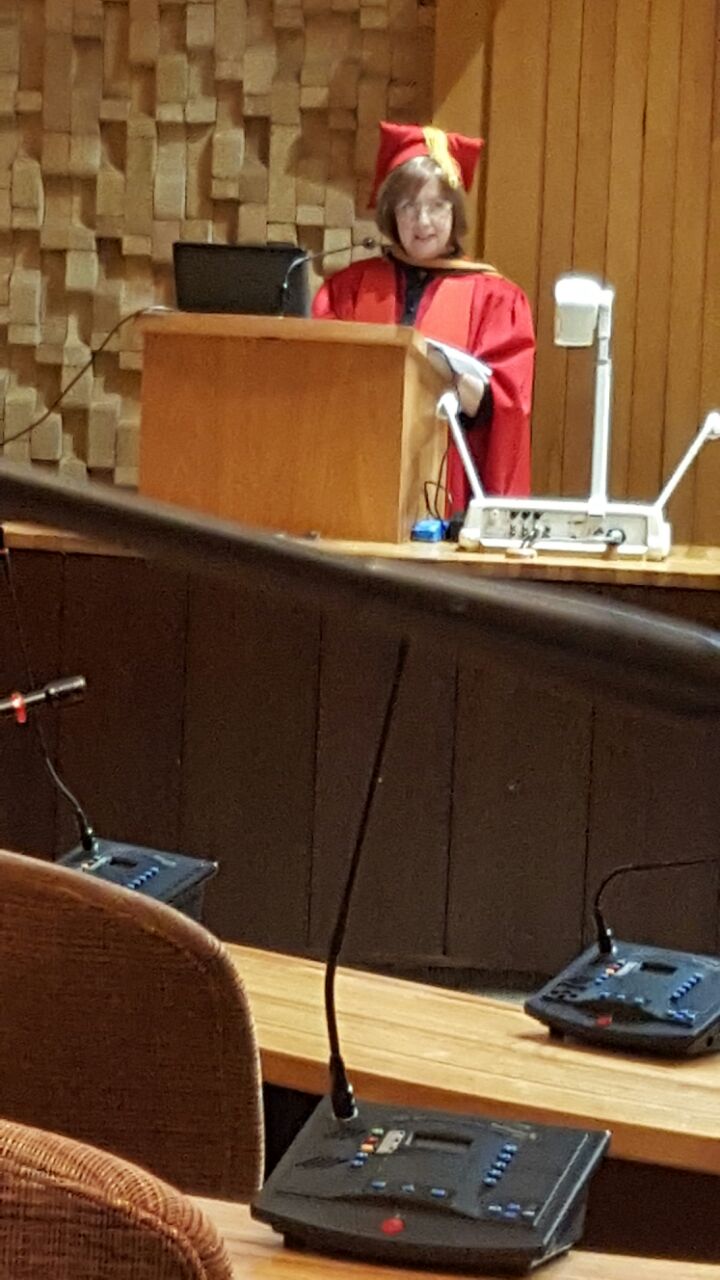 Having studied for a degree in nursing because I wanted to make a difference – her dream was to work at a Mission Hospital – Professor Botha said because of the political situation and specifically the political unrest of 1976, the year in which she graduated with a BCur degree, she was not permitted to pursue this dream.
“I had little time to choose another direction and in the end enrolled for a master’s degree in Critical Care Nursing instead of going to the Mission Hospital. The Critical Care Environment eventually became the clinical environment where I spent a considerable time of my professional life.”
When she enrolled for her doctoral degree, she moved to an area in the clinical environment where the discipline in which she is currently teaching, intersects with Critical Care Nursing. “I worked on the rehabilitation of patients who had suffered a serious cardiac event – patients who were admitted to a Critical Care Unit, but had been discharged and were back in the communities they came from. These people had to learn to cope with their cardiac condition in the community and at work.”
During her years of teaching Community Health Nursing after her second appointment at Unisa, she realised that Africanisation was prominent in this discipline. “During my personal and professional life, people journeyed with me who had an impact on how I see the clinical healthcare environment and the inside of a Critical Care Unit. A professor who had a significant influence on my way of thinking one day said to me, ‘Remember, for healing to take place, it is important for the people of Africa to be in the sun or sunlight’. He made me aware of the fact that not all healing environments should look the same.”
Furthermore, she said in the musical The King and I, Anna says, “when you become a teacher, by your students you will be taught”. “Many of my previous students taught me much. I remember one of my master’s students who explained to me the cultural importance of the ‘fetching of the spirit of the deceased’ after I had observed this ritual while moderating a practical examination in a Critical Care Unit and had asked her about it afterwards. This is but one example, but many of these students made me aware of African culture in the context of a super-specialised healthcare environment. One of my previous students also later wrote an article about this ritual.
“A friend of mine shared his story with me of how it happened that he became a nurse. The place where he grew up, was deep, deep rural. What stayed with me about his story is that he told me that until the day that he embarked on a nursing career, he had never ever seen the inside of a hospital. I realised then that there are probably many people who grow very old before they see the inside of a hospital for the first time. These are but a few of the incidents that made me think in an analytic way about the inside of critical care units as I know them in South Africa. I wondered whether this was the ideal healing environment in all cases.I consequently decided to use an autoethnographic approach to answer the question: The Critical Care Environment: should it be Africanised?
After conducting her research, which you can read here, Prof Botha believes that the critical care environment should be Africanised. “This is very clear. The study proposed will take some time, but what can we do in the meantime? As a starting point, we can look at the community health and primary healthcare context and adapt what has worked in that context to the context inside the hospital. I thought that I would find some guidance from the South African Nursing Council – I consulted all their documents, but could not find anything.
“As those involved in the whole spectrum of the clinical healthcare environment, and not just the critical care environment, we could apply the following suggestions and principles – be aware of one’s own ethnocentrism; assess the family’s beliefs about illness and treatment, consistently convey respect, request that the family and patient act as guides for cultural preferences, ask for the patient’s personal preference, respect cultural differences regarding personal space and touch, note appropriate complementary and alternative medical practices, and allow their use if possible; incorporate the patient’s cultural healing practices into the plan of care; nd be sensitive to the need for a translator.”
* Compiled by Rivonia Naidu-Hoffmeester (CHS communications and marketing)
Publish date: 2017-12-05 00:00:00.0
 Alumnus marvels at Unisa's transition from paper trails to digital excellence
 Unisa accounting career engagement draws students and industry leaders
 Unisa business management fundi calls for new research agenda on small businesses
 Strategic engagement between Unisa and UNAM opens doors for collaboration
 Unisans shine at major research conference