

The African college of excellence in the social and human sciences
 In recent months, South African society seems to have finally awoken to a problem that has been plaguing our country for years, the abuse of women and children. The murder of Karabo Mokoena, allegedly by her boyfriend, rocked the nation and gave birth to a new sense of urgency that something must be done about the violence committed towards our women and children.
The truth is Karabo was not the first women in South Africa to be murdered at the hands of her intimate partner and she will not be the last if society and government do not play equal roles in combatting this pandemic. Yes, I call it a pandemic, because if one in four women in South Africa is a survivor of domestic violence and one South African woman is being killed by her intimate male partner every eight hours, what else shall we label this? And these are just femicide statistics, this does not take into account other acts of physical, emotional, vernal and sexual violence committed against our women and children by strangers.
This high incidence of domestic violence has continued unabated, despite the introduction of the Domestic Violence Act 116 of 1998 by the South African government, which aimed at protecting the rights of women. It can therefore be argued that violence against women has reached epidemic proportions in South Africa as it occurs in many households.
I conducted a study on middle class, educated and employed women in Mamelodi township in Pretoria who are survivors of domestic violence. The participants indicated that domestic violence begins with small gestures of power and control and explained that the gestures of power and control can move from choosing the women’s dressing, to having power and control over the women’s body and their sexuality.
There was a common view among some married research participants that, as married women, they do not have power or control over their own bodies. This is a view that certain communities reinforce, in the name of culture. In this township, it is also normal and common to witness domestic violence, as expressed by the research participants. The entrenchment of patriarchy in this community has led to the oppression and exploitation of women. It is my view, based on my study, that in Black townships, domestic violence occurs and everyone is aware of it, although the public in most cases do not voice their disapproval of it.
This study discovered that earlier exposure to domestic violence in one’s family influences staying in or exiting an abusive relationship. Research participants openly admitted to having witnessed their fathers being physically, emotionally and verbally violent towards their mothers, and their mothers stayed in these domestic violence relationships. This has influenced them to perceive domestic violence as that “a woman must have done something to aggravate her partner” and she must persevere. Therefore, they also decided to stay in their domestic violence relationships because they will not do anything to aggravate her partners.
Participants who exited their domestic violence relationships did so because of different reasons. A participant realised that her intimate relationship began in her teen years. She fell pregnant after being raped but her family made her marry this man in order to protect their family name and their Christian beliefs. Years into the marriage, he began physically, emotionally, and verbally abusing her. By the time she reached her forties, she wanted to reclaim her power and in order to this, she made the decision to divorce her violent partner and exit the relationship.
Realisation of one’s goal and aspirations is important. One participant decided to leave her partner because she did not experience independence after the relationship became violent. Her partner watched her every move, and she had to constantly ask for permission. There was physical, emotional and verbal abuse in the relationship and ultimately, she could not deal with his suspicions and insecurities. After one physically violent incident, she decided to report him to the police. She had great support from her siblings which also helped her leave.
In another incident, after the realisation, that there was nothing else to financially support her husband with, a participant wanted to prove to her mother that she was still the strongest daughter she had raised. In order to do this, she divorced her violent husband.
We learn that violence is a deliberate choice the perpetrator makes. The relationships will begin with small, and sometimes, unnoticeable gestures of control and power over women. There will be incidents of emotional, verbal, financial and sexual abuse, and ultimately physical abuse ending with femicide.
Earlier on in my activism, I conducted a study on university female students who were victims of domestic violence. In that study we learnt that when the perpetrator wants to earn trust and forgiveness from the victim, he would shower her with gifts, exotic dates and trips, roses and so on. “He would be a gentleman”. Once the woman shows signs of having forgiven him, verbal outbursts begin, followed by beatings on the face and words “I am so sorry, I promise this will never happen again”, “please forgive me”, “I can’t live without you”, “I love you to death” or “I promise I will change”.
Another lesson learnt is that you can exit a violent relationship as indicated by some of the women in my study. It takes that one-step of realising that only women themselves can end the relationship, and not their violent partners. We learn that it takes women realising their worth. Women are worth so much more than “trying to cure the perpetrator with their love”. If domestic violence can first take place in the family origin of the perpetrator, where they had witnessed their father’s or mother’s being violent with each other, how can women cure that experience? As the saying goes, “you can’t fix what’s been broken because the pieces have been shattered, torn, ripped from inside out. Even if you try to glue it back, the pieces that make it whole will never be the same”.
Women in violent relationships must unlearn thinking that things will be normal again. There may be normal for the next woman in his life but they must exit. I would listen to women expressing themselves that “he is remorseful he even bought me roses”. The more I heard these stories of roses, the more I advise women to perhaps view “roses” as symbol of a gravesite. In some incidents the perpetrator may not have physically murdered a woman but he may be emotionally responsible for putting her in her early grave and she may expect the same gestures of “receiving roses”.
We also learnt that the profile of a perpetrator is a man from any race, culture, class, and educational status. He is that man, who is religious, respected by the community, appears to possess integrity, is successful in his career, and friendly to everyone they meet, or he can also be the opposite of the above lists
There are signs that women can be weary of. They need to listen to how a man speaks of his relationship with his father, and watch how is with his father, listen closer to his interpretation of romantic love, watch how he relates with women in general, and take note of his expectations of a romantic love relationship. Additionally, if a woman notices a different side to her male partner, even if the moment lasts for a short while, a woman must know and trust her instinct. This moment she is witnessing privately or publicly is exactly who this man is. This side has potential to escalate to emotional, verbal, and sexual violence, and ultimately murder. He may convince a woman that he can control himself and perhaps he can for few days, weeks, months, and years, but research shows that this side is mostly likely to occur again.
Another lesson to be learnt is that domestic violence is a deliberate use of violence (an act carried out with the intention of causing physical pain or injury to another person) between two persons who are either married (in terms of law or custom), unmarried and cohabiting, or who are not cohabiting but consider themselves to be a couple. The forms of violence include slapping, tearing hair, pushing and pulling, kicking, hitting with an object, attempting to strangle, threatening, verbal abuse, sarcastic remarks in the presence of outsiders, imposing severe restrictions on freedom of movement, stalking, totally ignoring the wife in decision-making processes, and making frequent complaints against her to her parents, friends, neighbours and kin, much to the embarrassment of the wife.
Other forms of domestic violence are sexual violence, which is forced sexual intercourse and other forms of sexual coercion. There are also control motives used by the violent partner. Motives are identified operationally by patterns of controlling behaviour that indicate an attempt to exercise general control over the partner. It is physical, sexual, or psychological harm by a current or former partner or spouse, an can be further described as a pattern of behaviour used to establish power and control over another person with whom an intimate relationship is or has been shared, through fear and intimidation, often including the threat or use of violence.
The prevention of the intergenerational transmission of domestic violence is an individual moral obligation and a social responsibility. Parents and guardians must unlearn all their previous lessons regarding the traits of femininity and masculinity. They must instill the values of love, respect and self-worth to their children, earlier in life. Without these values, their children become adults who lack insight, the deep sense of love, respect and self-worth. The same adults will seek partners who possess love, respect and self-worth, with an intention to extract all of it, in the name of “love”.
Forgive your past-experiences, you were not responsible for it, however, you are responsible for your present and future experiences. Begin early adulthood by having a relationship with yourself. Love, respect, create your self-worth and have deep conversations with yourself. Learn to be secure with yourself, your emotional and physical abilities so you won’t need to search and extract it from intimate relations and workplaces.
Communities should revisit cultural customs that are exploiting, dehumanising and compromising the lives of women. The traditional leaders need to play a positive role in resolving domestic violence in their local communities. Churches and other religious groups should play a positive role by condemning acts of domestic violence and protecting the rights of women and children. Prevention is better than cure.
In order to prevent the perpetuation of the generational transmission of domestic violence, the South African Department of Women should focus on working collaboratively with NGOs and the private sector. There should also be strong collaborations with other departments. Examples of how to work with other departments include:
The above lessons should serve to provide information to the South Africa government about a direly needed and comprehensive domestic violence programme, the implementation of which is vital in communities. Given the seriousness of this problem, empowering women through education and training on how to deal with domestic violence issues should be regarded as a priority and not just another marketing activity.
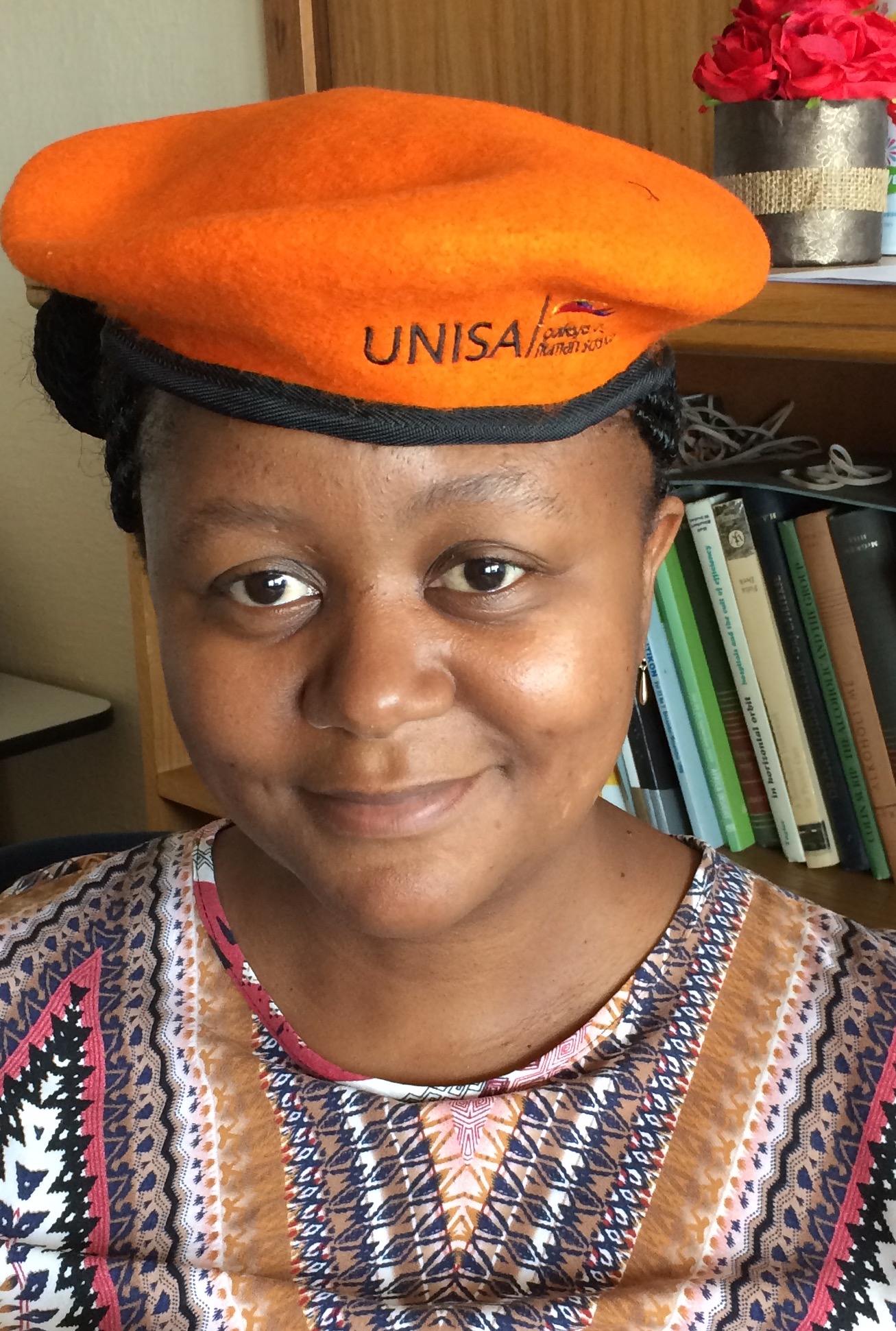
* Dr Nokuthula Mazibuko is from the Department of Sociology at the University of South Africa
Publish date: 2017-08-02 00:00:00.0
 CRDB Bank CEO earns PhD from Unisa
 In a world of misconceptions, clarity is power
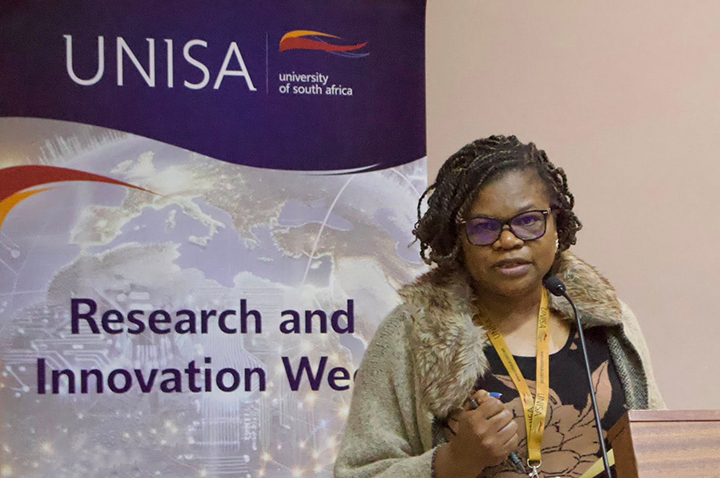 CSET showcases research excellence at Unisa Research and Innovation Week 2026
 Celebrating a linguist in pursuit of greatness
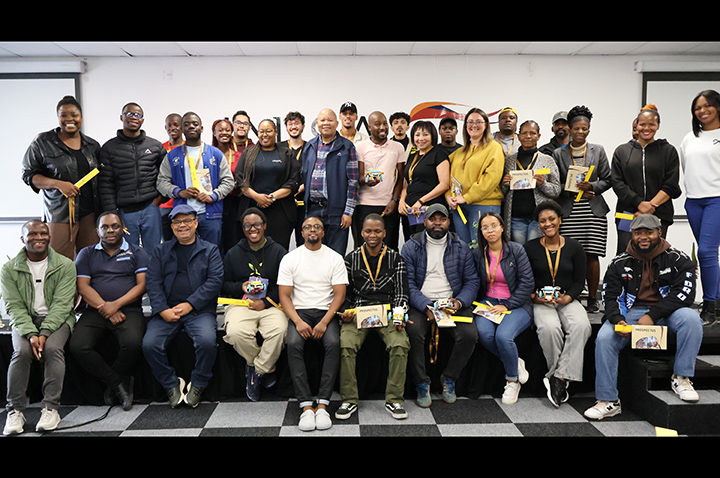 Unisa advances digital skills through robotics and coding initiative