
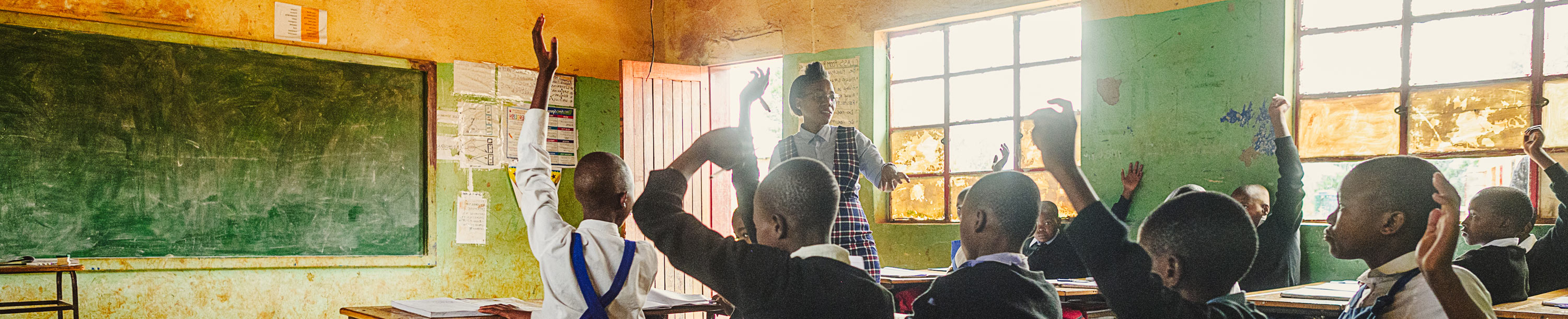
Producing over 40% of teachers in South Africa

In 2025, the College of Education (CEDU) at Unisa advanced its Climate Change Education Flagship Project, led by Prof Sikhulile Msezane of the Department of Science and Technology Education, as a strategic African regional initiative focused on teacher development, curriculum innovation and collaborative research for climate action. The project seeks to respond to the urgent need to strengthen climate literacy and pedagogical capacity across higher and teacher education systems in southern Africa.
A key focus during the year was the development of structured academic and professional learning pathways. These included the design and piloting of a short learning programme (SLP) in Climate Change Education (CCE), the drafting of a postgraduate diploma framework, and the development of a training manual to support module leaders in embedding CCE across disciplines. Capacity-building workshops were also conducted with academics and postgraduate students to reinforce research-informed and context-responsive approaches to climate education.
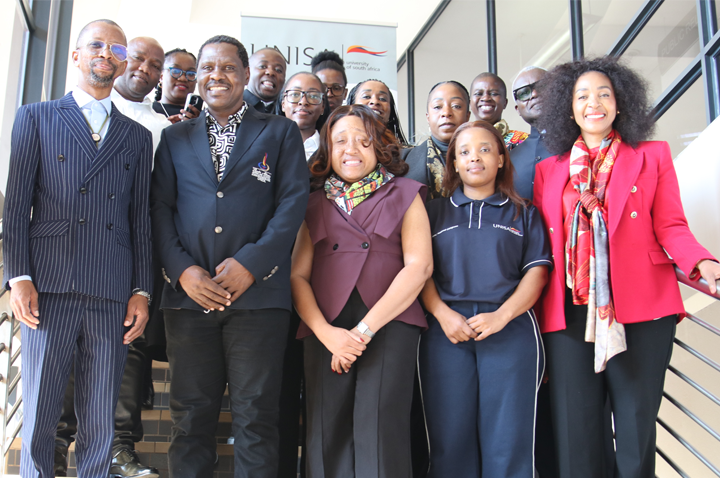
Regional engagement with a focus on Africa was a central pillar of the project. In September 2025, Unisa-led delegations undertook strategic visits to the University of Zambia, the University of Namibia, the International University of Management, also in Namibia, the University of Ghana, the University of Eswatini and the University of Reading in the United Kingdom, strengthening institutional collaboration around curriculum development, joint research, postgraduate supervision, staff and student exchanges, and community outreach.
The visits culminated in agreement on a joint collaborative action plan (2025–2027), with efforts currently underway to finalise a memorandum of understanding between the institutions. Soon, another African partner, the University of Dar es Salaam in Tanzania, will join in the drive to further expand the project’s regional footprint and knowledge exchange network.
Supported by a three-year NRF grant (2025–2027), this project seeks to facilitate sustained research activity, the establishment of regional partnerships and programme development. To that end, 2025 research outputs included collaborative publications and a book chapter, alongside groundwork being done for future co-authored studies and postgraduate projects.
Overall, in 2025, the CEDU Climate Change Education Flagship Project laid a strong foundation for regional leadership in CCE, positioning Unisa as a key hub for advancing teacher education, research and curriculum innovation in support of sustainable futures.
Unisa’s Climate Change team is pleased to report that work is now underway to develop an accredited postgraduate diploma and an SLP in climate change. A formal announcement will be issued once the programmes have been finalised and are open for enrolment through Unisa.
A number of CCE-related, peer-reviewed research publications in accredited international journals are projected for 2026. In addition, participation in, and the planning and presentation of, an international climate change conference hosted by the Department of Science and Technology Education is scheduled for September 2026 at Sun City, under the auspices of Unisa.
In 2026, the Unisa Climate Change Project initiative is expected to foster provincial and regional engagement with principals, schools, teachers and learners as they strengthen their focus on CCE.
In addition to Msezane, members of CEDU’s Climate Change Project, who are drawn from the Department of Science and Technology Education, the Department of Curriculum Studies, and the Department of Language Education, Arts and Culture, include Prof Headman Hebe, Prof Dumsani Mncube, Prof Lettah Sikhosana, Prof Princess Blose, Dr Khathutshelo Munasi, Dr Nonkanyiso Shabalala, Lawrence Masuvhe, Dr Thelma Mort and Dr Anriët Van Deventer.
This year, its activities will culminate in the publication of an accredited volume on CCE, featuring contributions from international scholars. The chapters will address diverse focal areas, including teacher education, module reflection, change, integration and implementation of climate change, and current scientific data on climate change, with Mncube, Msezane and Van Deventer heading up the editorial team.
For more information, click here to visit the International University of Management's Facebook page.
For enquiries, contact Prof Sikhulile Msezane at msezasb@unisa.ac.za
* By Dr Anriët van Deventer, Department of Language Education, Arts and Culture, and Climate Change Project team member
Publish date: 2026-03-04 00:00:00.0

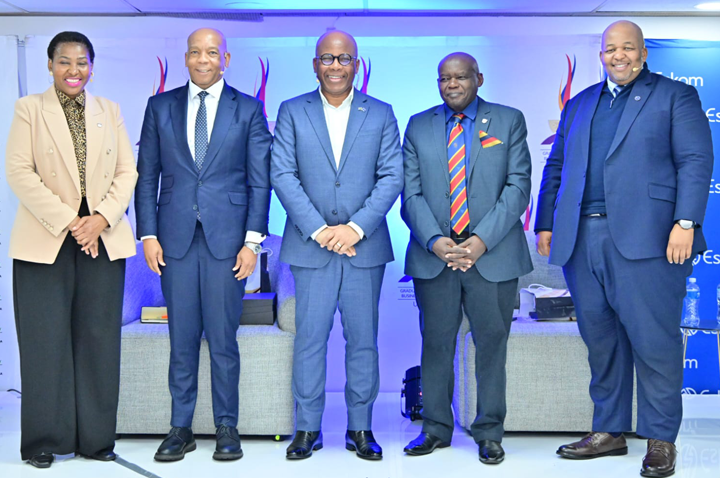 Unisa SBL brings energy leaders together to ask: Can South Africa keep the lights on?
 Renowned and multi-award-winning acts to headline the 2nd Unisa African Music Festival
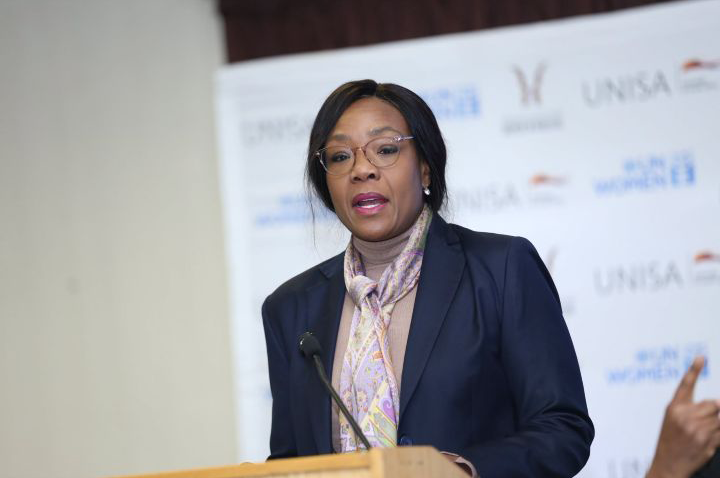 From the women of 1956 to the women of tomorrow: Unisa dialogue calls for action
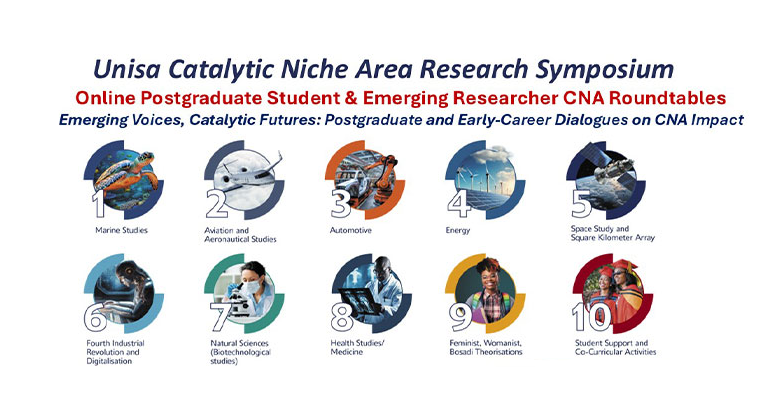 Emerging researchers turn Unisa's Catalytic Niche Areas into engines of collaboration and impact
 Africa's future is in your hands: Unisa and AUDA-NEPAD challenge youth to drive Agenda 2063