News & Events
Skills for a shared future: Preparing young people for an AI-driven world of work
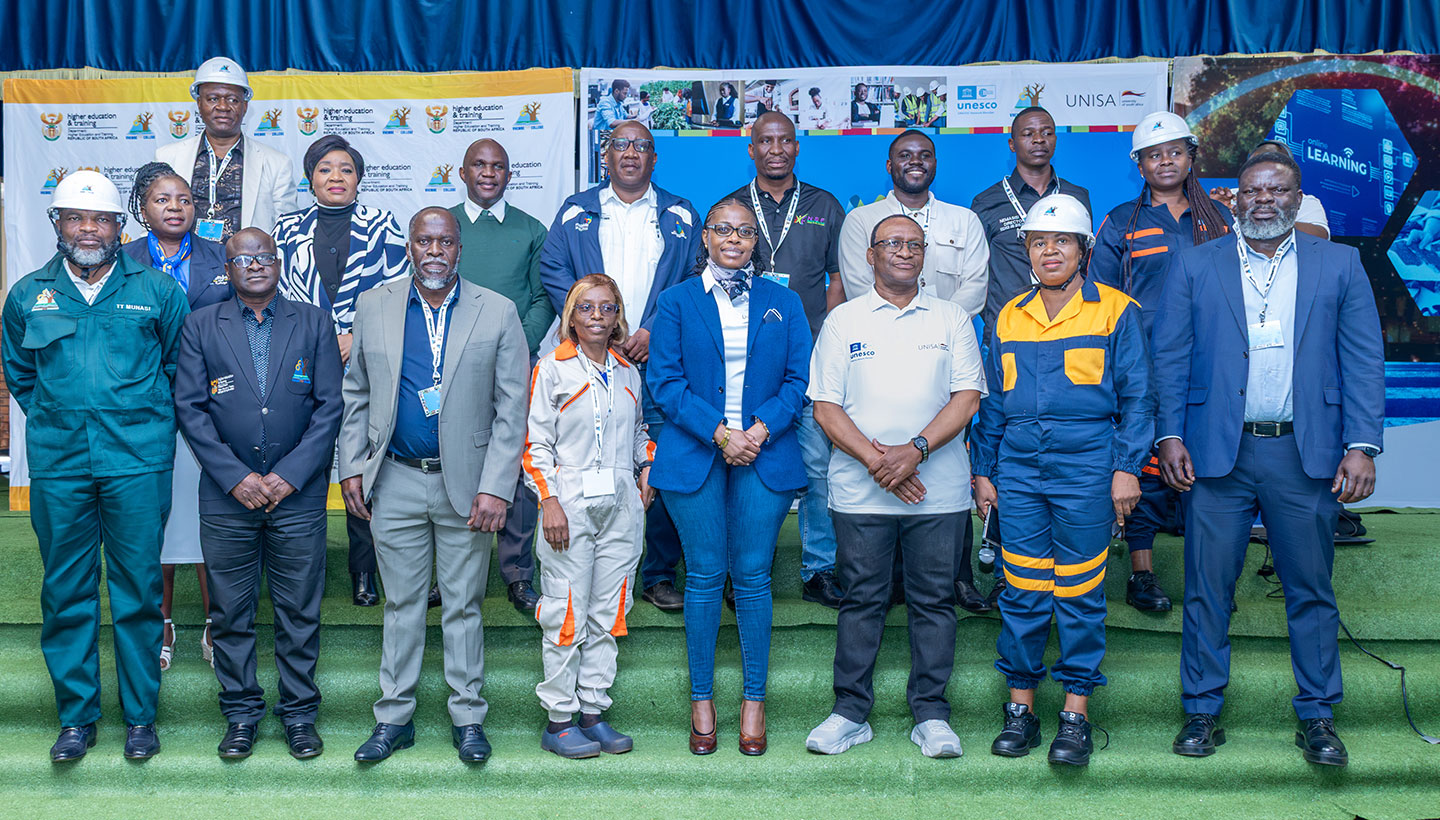
UNEVOC Centre Management, Prof Sello Mokoena and Prof Vaola Sambo with Vhembe TVET College Principal Ms Basani Hlekani, managers from Vhembe TVET College and representatives from other TVET colleges in Limpopo.
For young people entering an increasingly competitive and technology-driven world of work, qualifying is only the beginning.
The ability to adapt, keep learning, solve problems and create value will increasingly determine who is able to turn skills into meaningful opportunities.
This was one of the key messages to emerge when the University of South Africa’s (Unisa) UNEVOC Centre partnered with Vhembe TVET College to celebrate World Youth Skills Day 2026 under the theme “Skills for a Shared Future”.
Held at Vhembe TVET College’s Makwarela Campus in Thohoyandou, the event brought together students, educators, policymakers and industry representatives to examine the skills young people need to navigate a rapidly changing world of work.
The discussions highlighted a central challenge facing education and training institutions: how to prepare young people for jobs that are being reshaped by artificial intelligence, automation, digitalisation and other social and economic changes.
Speakers emphasised that future-ready TVET graduates will need more than technical competence. They will also need digital and artificial intelligence skills, an understanding of the green economy, strong social and emotional capabilities, civic awareness and the ability to continue learning throughout their careers.
Professor Sello Mokoena, UNEVOC Centre Coordinator at Unisa, said the pace of change meant that young people could no longer rely solely on the skills they acquire at the beginning of their careers.
“Our life is determined by artificial intelligence, the great transition and growing social complexities are transforming how we learn, work and participate in society.”
He said young people would need a broader combination of competencies to remain relevant.
“To thrive in this changing landscape, young people need more than technical skills. They need a balanced set of competencies that combine technical, digital, AI, greening, social, emotional and civic skills with human qualities that technology cannot replace.”
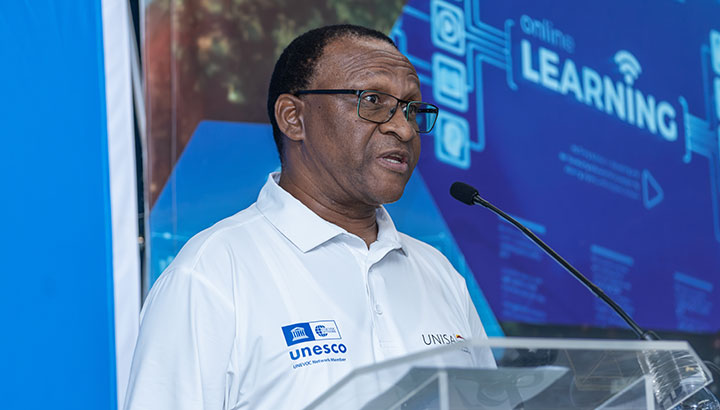
Prof Sello Mokoena, UNEVOC Centre Coordinator at Unisa.
The growing influence of AI does not mean traditional vocational occupations will disappear.
Thomas Munasi, CEO of Vuwa College and keynote speaker at the event, reminded students that practical occupations remain essential to society.
“Yes, even when AI is taking over, we still need bricklayers, we still need carpenters, we still need electricians, we still need plumbers, which in most cases we don’t see as the skills for the future.”
His message was particularly relevant for students deciding how to translate their education into careers. The future of work, he suggested, will not simply be about the institution a person attended or the qualification they obtained. It will be about what they can do with their knowledge and skills.
“The world will not ask you where you studied; they will ask you what value you can add or create, which problems you can solve and which solutions you can provide.”
He challenged students to see themselves not only as job seekers, but as people capable of creating solutions and opportunities.
“May your answer always be: I can build, I can innovate, I can heal, I can feed communities, I can design, I can code, I can create jobs, I can lead, I can entertain, and I can teach.”
For Munasi, that mindset must be supported by a commitment to lifelong learning.
“Ask questions, seek information, identify and develop new competencies, volunteer your service and acquire practical skills.”
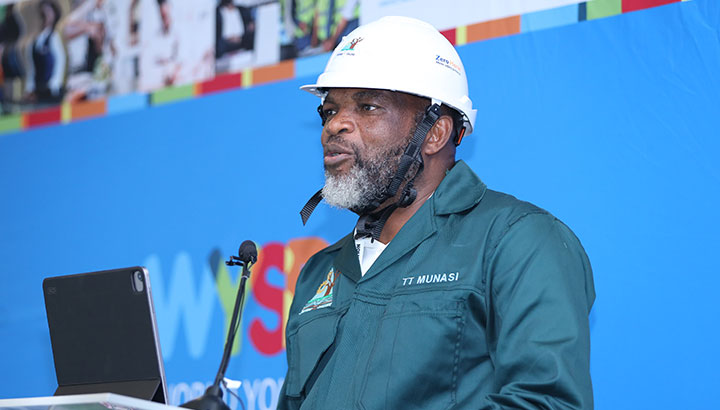
Thomas Munasi, CEO of Vuwa College.
While technology and technical competence were important themes, the event also placed strong emphasis on something equally important: the mindset young people bring to their careers.
Youth empowerment emerged as a recurring message, with speakers encouraging students to broaden their ambitions, seek information and take greater ownership of their futures.
Hanna Demana, owner of Hadesa Express, urged young people not to allow circumstances or limited expectations to define what they believe is possible.
“I’m trying to encourage the youth to show you that opportunities are available. You just need to push yourself. You just need to believe in yourself and stop competing in a small volume.”
She encouraged students to set ambitious goals.
“You should think bigger, you should aim higher because if you play small games, you get small prizes.”
Mashudu Mutele, owner of Hunny Bunny Bakery, similarly encouraged students to take initiative rather than wait for opportunities to come to them.
“There are opportunities out there. Stand up, be creative and think big. Nobody will come to your place and think for you.”
He left students with a simple but powerful reminder about personal responsibility and determination:
“It is important that every time you wake up in the morning, you tell yourself that today is your day and you’re going to make it in life.”
These messages reinforced a broader lesson from the celebration: skills only become meaningful when young people have the confidence and initiative to apply them.
Closing the event, Professor Vaola Sambo, UNEVOC Centre Manager at Unisa, placed the day’s discussions in a broader context.
She said skills development was not only about helping individuals secure employment or build careers. It was also about strengthening communities and contributing to South Africa’s development.
“Skills are not just about individual achievement. They are the foundation for a shared, inclusive and sustainable future for our communities and for South Africa.”
Prof Sambo said the enthusiasm and creativity demonstrated by students showed the important role Vhembe TVET College plays in local development and youth empowerment.
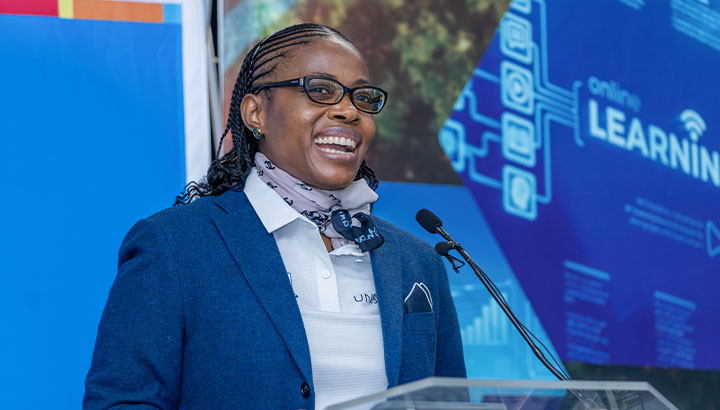
Prof Vaola Sambo, UNEVOC Centre Manager at Unisa.
She also returned to one of the strongest messages of the day: young people should actively pursue opportunities rather than wait for them.
“We stand here today with many opportunities that are available for you as the youth. Please grab those opportunities with both hands and run with them.”
The World Youth Skills Day celebration offered students more than a discussion about artificial intelligence or the future of employment. It provided a reminder that the future will belong to those who are prepared to keep learning and adapting.
For students at TVET colleges, universities and other institutions of learning, that means combining technical expertise with digital literacy, creativity, entrepreneurship, communication, problem-solving and the human qualities that remain difficult for technology to replicate.
It also means looking beyond the question of “What job can I get?” and asking a more important question: “What problems can I solve, what value can I create and what difference can my skills make?”
As South Africa confronts youth unemployment and a rapidly changing economy, the message from Vhembe was clear: education and skills development must prepare young people not only for the jobs that exist today, but for the opportunities that are still emerging.
For Unisa and its UNEVOC Centre, the celebration reinforced the importance of building partnerships that connect education, vocational training, industry and young people around a shared goal: creating a generation equipped to learn, innovate, adapt and contribute to a more inclusive and sustainable future.
* Compiled by Mamonare Mahlo, Communication and Online Officer: UNEVOC Centre at Unisa.
Publish date: 2026-08-19 00:00:00.0