

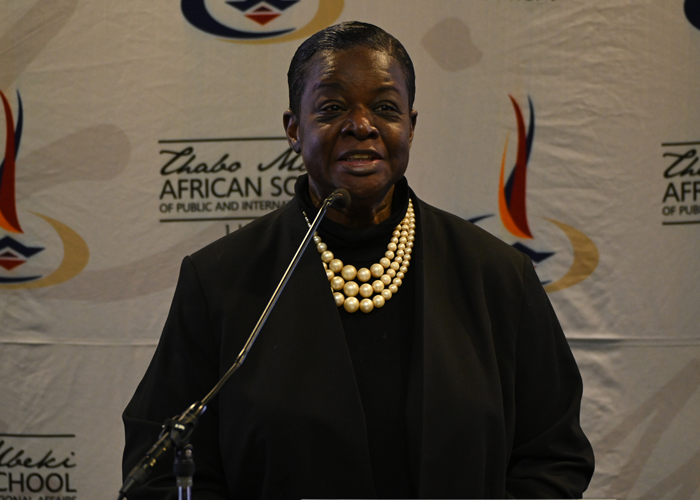
Ms Phillipa Dianne Lawrence, former Jamaican career diplomat and former Chief of Protocol at the United Nations Office in Vienna
Diplomatic protocol is often associated with ceremony, etiquette and official order. At a seminar hosted by the Thabo Mbeki African School of Public and International Affairs on 24 July 2026, speakers argued that it also determines who is recognised, who is heard and who is allowed to exercise authority.
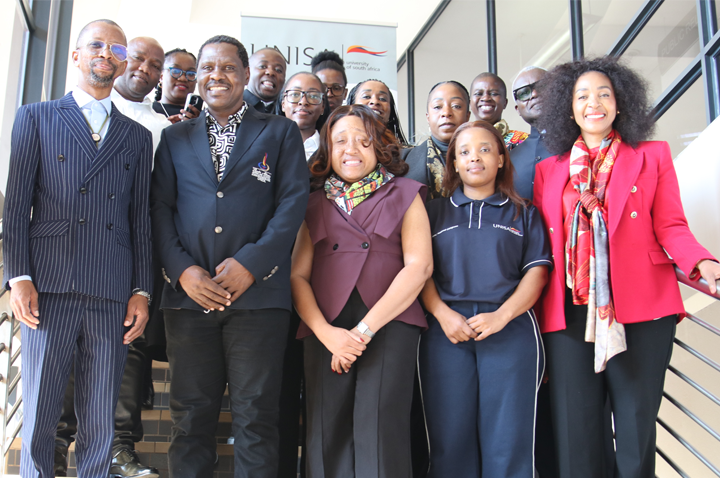
Held at Bamboo Hall in the Kgorong Building at Unisa's Main Campus, the seminar, titled The Impact of Protocol on Women in Multilateralism: Power, Visibility and Institutional Practice, brought together members of the diplomatic community, academics, students and online participants. The event followed a two-day training programme on protocol and diplomacy practice.
Opening the seminar, Prof Edith Phaswana, Acting Executive Dean of the School, said protocol should not be regarded simply as a collection of ceremonial rules governing official engagements.
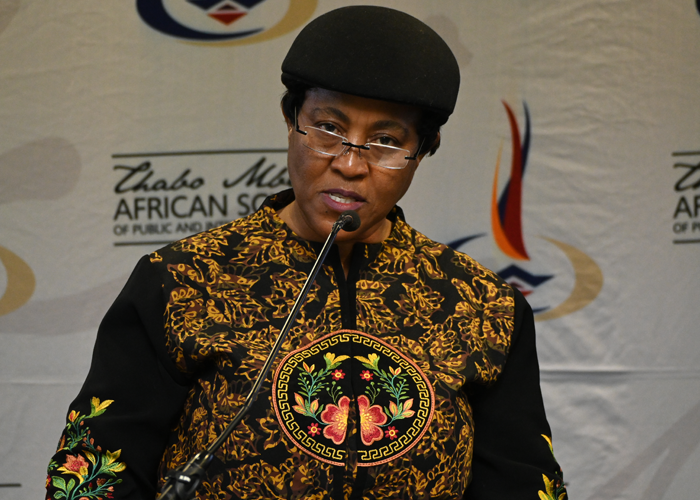
Prof Edith Phaswana, Acting Executive Dean of the School
"Protocol is a language of power," she said. "It determines who is seen, who is heard, who is acknowledged and who occupies positions of influence."
Phaswana warned that institutional practices could either reinforce historical inequalities or become instruments of inclusion and transformation. Women in senior positions, she observed, were still sometimes overlooked while junior male colleagues were assumed to hold greater authority.
She urged future public leaders, policymakers, diplomats and scholars to approach protocol not as a rigid tradition but as a dynamic instrument that reflects "equity, dignity, respect and excellence". Empowering women, she added, was not merely a women’s issue, but "a leadership imperative, a governance imperative and a development imperative".
Guest speaker Ms Phillipa Dianne Lawrence, a former Jamaican career diplomat and former Chief of Protocol at the United Nations Office in Vienna, examined the formal and informal rules that shape women’s participation in multilateral institutions.
Lawrence described protocol as "the invisible architecture of multilateralism", shaping access, authority, precedence and voice. Although intended to ensure order and equality among states, she argued that protocol developed within political systems in which diplomacy and leadership were predominantly male.
As women entered diplomatic services and international institutions, they did so within frameworks that had not been designed with them in mind. This legacy remains visible when women are misidentified as support staff, excluded from recognition as heads of delegations, subjected to greater scrutiny over appearance and conduct, or left outside the informal spaces in which negotiations take place.
"Protocol, formal and informal, can determine not only where women sit, but whether they are in the room at all," Lawrence said.
However, her address did not present women as passive victims of institutional practice. Women diplomats and protocol officers, she said, increasingly use the rules strategically to insist on correct titles, precedence, representation and equitable access.
"Protocol becomes not just a constraint, but a lever – a formalised system that can be corrected, enforced and modernised," she said.
Responding to the presentation, H.E. Mrs Joane Thomas-Edwards, High Commissioner of Jamaica to South Africa, situated the discussion within Jamaican and Caribbean diplomatic experience. She said she stood "on the shoulders of women" who had pioneered Jamaica’s participation in diplomacy and created pathways for later generations.
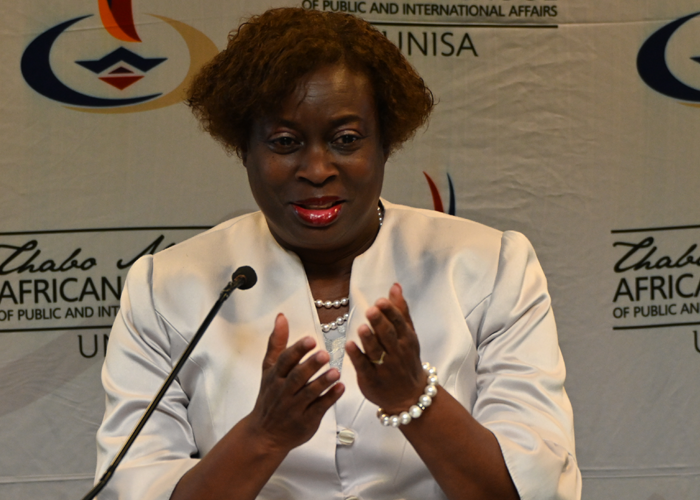
H.E. Mrs Joane Thomas-Edwards, High Commissioner of Jamaica to South Africa
Thomas-Edwards emphasised knowledge, mentorship, networks and alliances as essential tools for women operating in multilateral spaces. Diplomats had to understand both the formal rules and the informal negotiations through which influence was exercised.
Drawing on her own experience, she recalled making a proposal in a meeting that received little response until it was repeated by a male representative from a more powerful country. She reclaimed the idea by thanking the meeting for accepting "the proposal which I made".
She also reflected on Jamaica's work, alongside Namibia, in advancing women, peace and security within the United Nations Security Council, illustrating how smaller states and women-led diplomatic teams could shape the multilateral agenda through knowledge, persistence and coalition-building.
The panel discussion and question-and-answer session widened the conversation to include the experiences of small states, the unequal global order, African values, appearance, mentorship and the risk that women themselves may reproduce patriarchal institutional cultures.
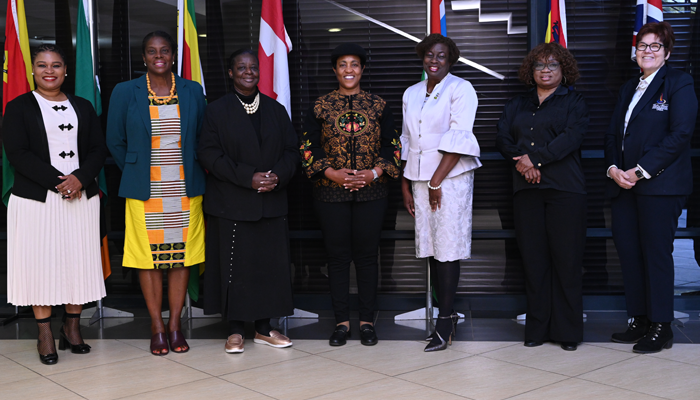
Lawrence concluded that gender-responsive protocol was not a symbolic accommodation, but a requirement for legitimate multilateral governance.
"Representation without respect is not equality," she said. "Women are not merely adapting to protocol. They are redefining it."
*Tshepo Neito, Marketing and Communications Specialist, Thabo Mbeki African School of Public and International Affairs
Publish date: 2026-08-07 00:00:00.0

 Unisa SBL brings energy leaders together to ask: Can South Africa keep the lights on?
 Renowned and multi-award-winning acts to headline the 2nd Unisa African Music Festival
 From the women of 1956 to the women of tomorrow: Unisa dialogue calls for action
 Emerging researchers turn Unisa's Catalytic Niche Areas into engines of collaboration and impact
 Africa's future is in your hands: Unisa and AUDA-NEPAD challenge youth to drive Agenda 2063