

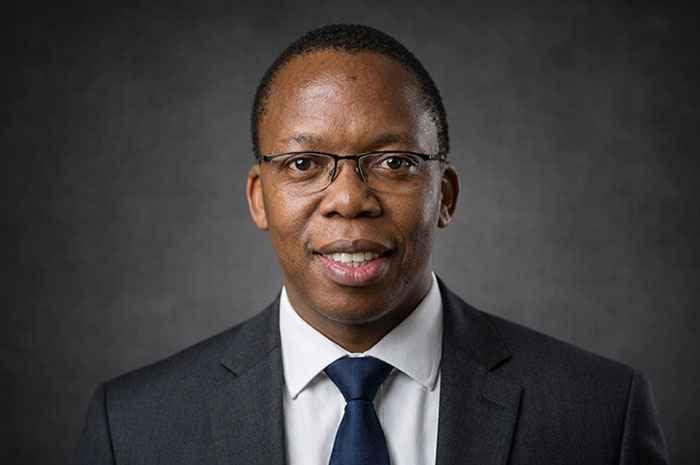
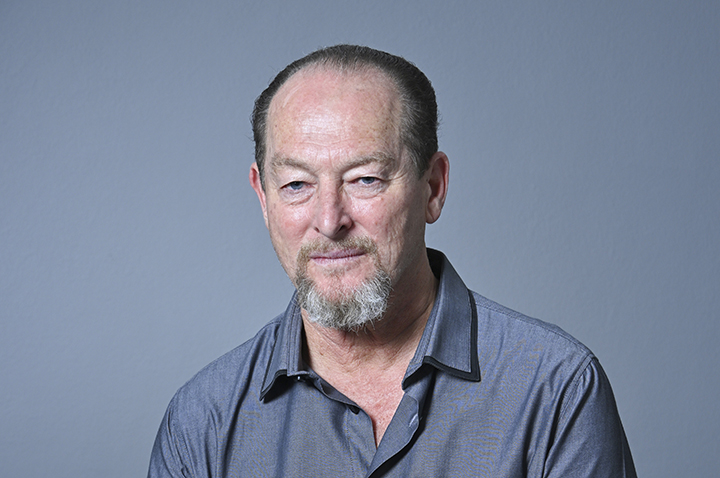
Dr Nicky Tjano, an active and successful member of the Professional Research Group
Unisa’s Professional Research Group (PRG) fills a critical gap in the research environment by offering structured, personalised and holistic support to emerging and established researchers in the university’s professional and support staff space.
As Dr Nicky Tjano, an active and successful member of the group, explains: "This is important, because professional support staff are known to be less interested or capacitated in their involvement in research compared to their academic counterparts. PRG’s uniqueness demonstrates Unisa’s commitment to nurturing internal research capacity for both professional and academic staff."
When asked whether he sees the PRG as a competitive advantage for Unisa, Tjano responds: "Yes, absolutely!"
Currently acting as Director of Teaching and Learning Strategy, Portfolio Performance and Strategic Projects in the Office of the Vice-Principal for Teaching, Learning, Community Engagement and Student Support (TLCESS), Tjano goes on to explain that the PRG enhances Unisa’s competitive position by improving research output, supporting staff development and positioning the university as an innovation-driven institution that invests in its scholars. He further expresses the view that very few institutions offer comparable personalised research support to professional staff at this scale.
The PRG contributes to the university’s research and academic agenda through its direct support of professional staff, in that way growing research productivity, fostering collaborative scholarship, and improving the quality and visibility of academic outputs. It therefore creates a pipeline of researchers who are motivated, supported and aligned with institutional priorities.
The work of the PRG fulfils an important role in relation to the university’s 10 catalytic niche areas (CNAs) instituted by Unisa’s Vice-Chancellor, Prof Puleng LenkaBula. The CNAs are strategically identified, interdisciplinary research focus areas intended to shape Africa's intellectual future, drive innovation and respond to societal needs. These 10 areas enhance the university's academic, research and postgraduate agenda.
In this context, Tjano explains that the PRG creates a conducive environment for research aligned with Unisa’s CNAs by encouraging interdisciplinary research, supporting innovation in emerging areas such as AI, governance, education and sustainability, and providing platforms for researchers to produce work that directly supports strategic focus areas. In short, it aligns with the philosophy that "we research what we teach, we teach what we research".
Discussing how being part of the PRG has influenced his professional growth, Tjano shares that it has expanded his scholarly confidence, improved his publication record and extended his engagement in national research communities.
"It has also enhanced my mentorship capacity as I am now a co-coordinator of an ES project, Multi-University Postgraduate Support Network and working in several AI-enabled academic development initiatives such as exploring opportunities on AI grading, integration of AI into curriculum design," he continues. "I am currently leading and participating in several AI-related research projects at a university level."
Tjano adds that over the period 2025 to 2026, his publication trajectory has focused on two interconnected areas of scholarship: AI-enhanced education, governance, ethics and academic integrity. His publications stem from his collaborative work with colleagues and also the University AI research project.
"In recognition of this body of work and my contributions to advancing Unisa’s academic project, I was recently honoured with the Performance Excellence Award in the TLCESS Portfolio," he says.
Dr Tjano further states: "I was also instrumental in establishing and co-leading the University AI Task Team which effectively developed the AI policy and guidelines for the university, and we are now working with other stakeholders to finalise and attend to matters guided by Senate."
Speaking on what key support he has received from the Professional Research Committee (PRC), Tjano says: "Being part of the PRG cohort has allowed for the PRC to provide me with financial support for conference attendance, access to a research-oriented community of practice, and a platform for mentorship and collaboration with experienced researchers, especially on research ethics. This includes fully funding my attendance at a local conference where I presented a paper from my PhD."
He continues: "The support has significantly accelerated my research productivity, and most importantly, assisted me in broadening my networking and learning from other like-minded scholars within my area of study, such as AI, corporate sustainability and governance. The funding came in handy and has actually removed financial barriers that often hinder conference participation, enabling me to present my work, receive critical feedback and engage with peers."
Tjano concludes the interview by stating: "I am deeply grateful for the PRG’s support. The programme has not only enabled my research success but has also empowered me to contribute to national academic capacity-building through AI governance workshops, research mentoring incubators, and thought-provoking engagements such as my ASCEND symposium presentation.”
* By Rivonia Naidu-Hoffmeester, Professional Research Committee (PRC) Marketing and Communications Convenor
Publish date: 2026-04-13 00:00:00.0
 Unisa sparks critical conversation on South Africa's unfinished land question
 From Unisa graduate to global fraud intelligence investigator
 Studying at Unisa was the right decision
 More than a game: Unisa is building health, teamwork and lasting connections through sport
 How prominent researcher is changing lives and raising Unisa's global profile