

The African college of excellence in the social and human sciences
On Wednesday 1 February 2017, the Institute for Gender Studies housed in the College of Human Sciences hosted a research seminar presented by Professor Efiritha Chauraya from Midlands State University, Zimbabwe. The lecture was titled Implementation of Gender Policy Initiatives in Zimbabwe State Universities.
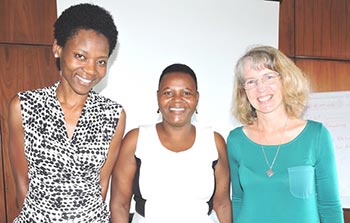
Prof. Puleng Segalo (Head: Research and Graduate Studies, College of Human Sciences), Prof. Efiritha Chauraya (Midlands State University, Zimbabwe), and Prof. Deirdre Byrne (Head: Institute for Gender Studies, College of Human Sciences).
Professor Chauraya said as a lecturer in the gender studies, her interest in conducting this study and writing this paper was sparked when Zimbabwe crafted their National Gender Policy. She described the document as a guideline that was produced to guide the implementation of policies and programmes that has to do with gender at all levels of the economy.
She provided a background of two reports which are the United Nations Development Report and the Nziramasanga commission both of which she said characterised Zimbabwean education as highly unequal in terms of gender representation. The reports also elevated the issues of gender in Zimbabwe to prominence which led to the crafting and adoption of the Zimbabwean National Gender Policy.
What particularly caught Professor Chauraya’s attention in the policy was what it said about the sector of education. She said when it comes to education the National Gender Policy stipulates clearly what the teacher training colleges should do, which is to come up with a related module or programme that would be part of their curricular.
She went on to say now when it came to other institutions of higher learning such as universities, it did not prescribe what each university should do but announced that “each university should strive to close the gender gaps in whatever way it sees suiting to its particular situation” and from that announcement Professor Chauraya said she found motivation to conduct a research on the progress on the work done by Zimbabwean State Universities with regards to the articulation the National Policy.
Professor Chauraya said in June 2008 she embarked on the voyagers of discovery from university to university trying to find out what they have been doing in terms of the implementation of the policy. She said first and foremost she was struck by the discovery that when one speaks of gender issues, often it is the women that comes to the other’s mind, more so if it’s a woman speaking.
After conducting a preliminary study, Professor Chauraya said she realised that gender gaps are indeed prevalent within universities, and she wanted to investigate how effective the implementation of this gender policy intervention was in student admissions in universities. From that she found that within the two universities she worked on, there were more male students than females.
According to Professor Chauraya poverty and economic hardship causes a lot of gender gaps and inequalities in Zimbabwe. She made an example that when parents cannot afford to send both their children to school at the same time, the girl child is always the one that suffers, “she is the last one to go to school and the first one to be pulled out when facing economic challenges” because Zimbabwean culture is that of son preference and daughter neglect, she said.
Professor Chauraya said her research results concluded that none of the two universities had a stand-alone policy on student admissions and none of them had a standalone policy on gender. Based on this outcome, she resorted to using the strategic plans of the intuitions for document analysis, wherein she found that the principal of gender equality was naively spelled out. And through interviews Professor Chauraya found that the Zimbabwean National Gender Policy was a document that the selection committee never interacted with. She therefore established a model that she believes will inculcate the needed paradigm shift for achieving gender sensitivity and equality.
Professor Chauraya is a visiting research scholar in the College of Human Sciences; she is housed in the Institute for Gender Studies until the 28 February 2017.
* By Katlego Bryan Pilane (CHS Communications and marketing)
Publish date: 2017-03-13 00:00:00.0
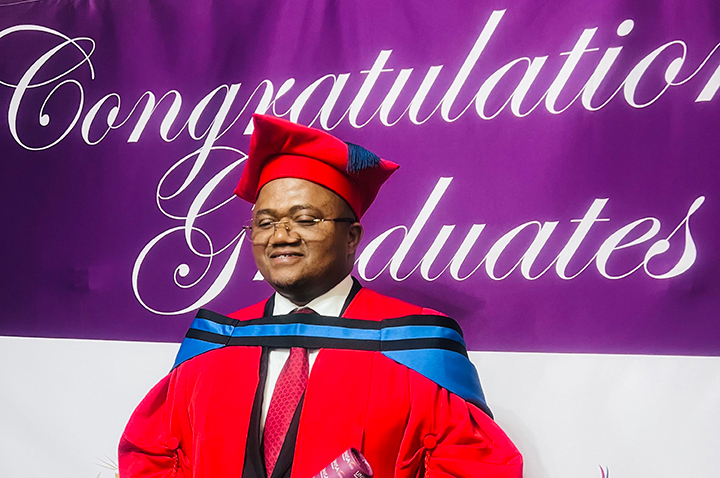 CRDB Bank CEO earns PhD from Unisa
 In a world of misconceptions, clarity is power
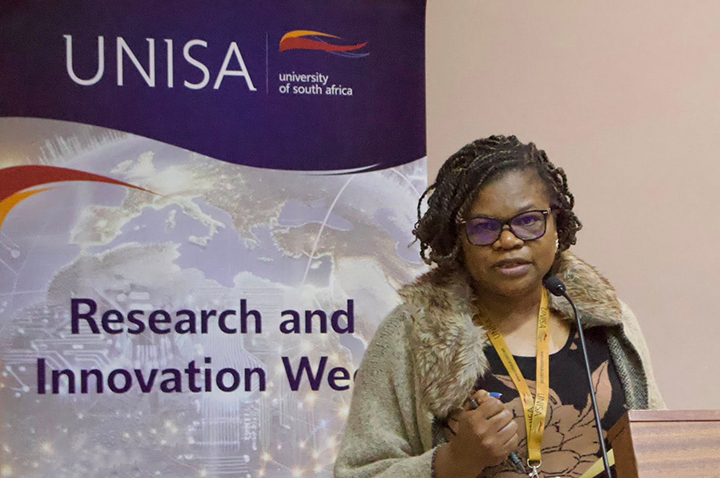 CSET showcases research excellence at Unisa Research and Innovation Week 2026
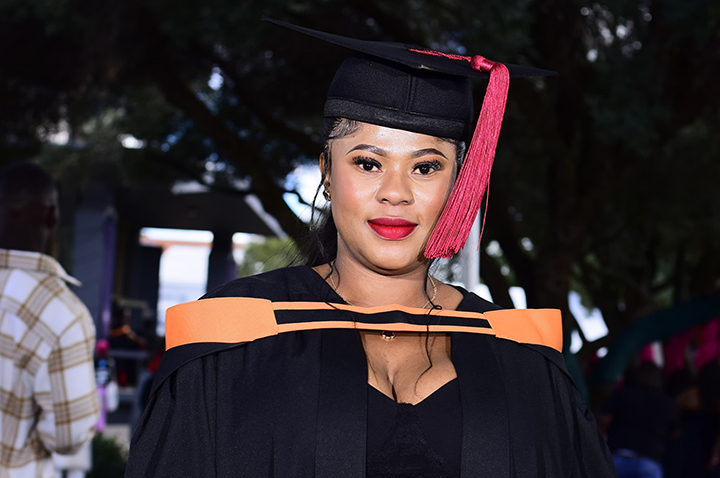 Celebrating a linguist in pursuit of greatness
 Unisa advances digital skills through robotics and coding initiative